Most travel trouble is not dramatic. It’s a stolen phone, a taxi with no seatbelt, a card that stops working, or a stomach bug far from a pharmacy you trust. These travel safety tips focus on the habits that prevent the common problems, and on what to do quickly when something goes wrong anyway.
Everything below is based on official government and health-authority guidance, with links so you can check the details for your own destination.
The Quick Answer
Before you go, read your government’s travel advice for every country on your route, buy travel insurance when you book, see a travel health clinician early, and back up your passport and bookings. While you’re away, treat road travel as the biggest everyday risk (seatbelts, marked taxis, no night driving on unfamiliar roads), split your money, watch your drink and respect local laws. Save the local emergency number, your embassy’s contact details and your insurer’s assistance line before you need them.
On this page
- Before you go: check the official travel advice
- Health and travel insurance
- Protect your documents, money and phone
- Getting around safely
- Day-to-day and night-time safety
- If something goes wrong abroad
- Travel safety checklist
- Travel safety FAQ
- The bottom line
Before you go: check the official travel advice
Your own government’s travel advice is the best starting point, because it’s written for your passport and updated when things change. The UK’s FCDO foreign travel advice covers entry requirements, safety and security, health risks and local laws for each country, and Canada’s official travel advice and advisories do the same for Canadians. Most other governments publish an equivalent.
- Check every country on the route, including transit stops, not just the main destination.
- Sign up for updates. GOV.UK lets you get email alerts for each country page. Canada’s Registration of Canadians Abroad is free and lets the government contact you in an emergency at your destination.
- Read the local laws section. Rules on alcohol, dress, photography, drones and medicines can differ sharply from home.
- Share your plans. Leave your itinerary and accommodation details with someone at home.
Entry rules belong in the same pre-trip check. Our guide on how to check visa and entry requirements walks through the official sources step by step, and our international travel checklist puts safety alongside documents, packing and money.
Health and travel insurance
Health problems are among the most common reasons trips go wrong, and the fixes start weeks before departure. The NHS advises getting advice from a travel health professional at least 4 to 6 weeks before you travel, because some vaccines need several doses or time to work, and the UK government’s checklist suggests checking health advice at least 8 weeks ahead. If you can, start earlier rather than later.
- Book a travel health appointment with a GP, pharmacist or travel clinic, and tell them about any existing conditions.
- Check medicine rules for your destination before you pack prescriptions; some countries restrict common medicines.
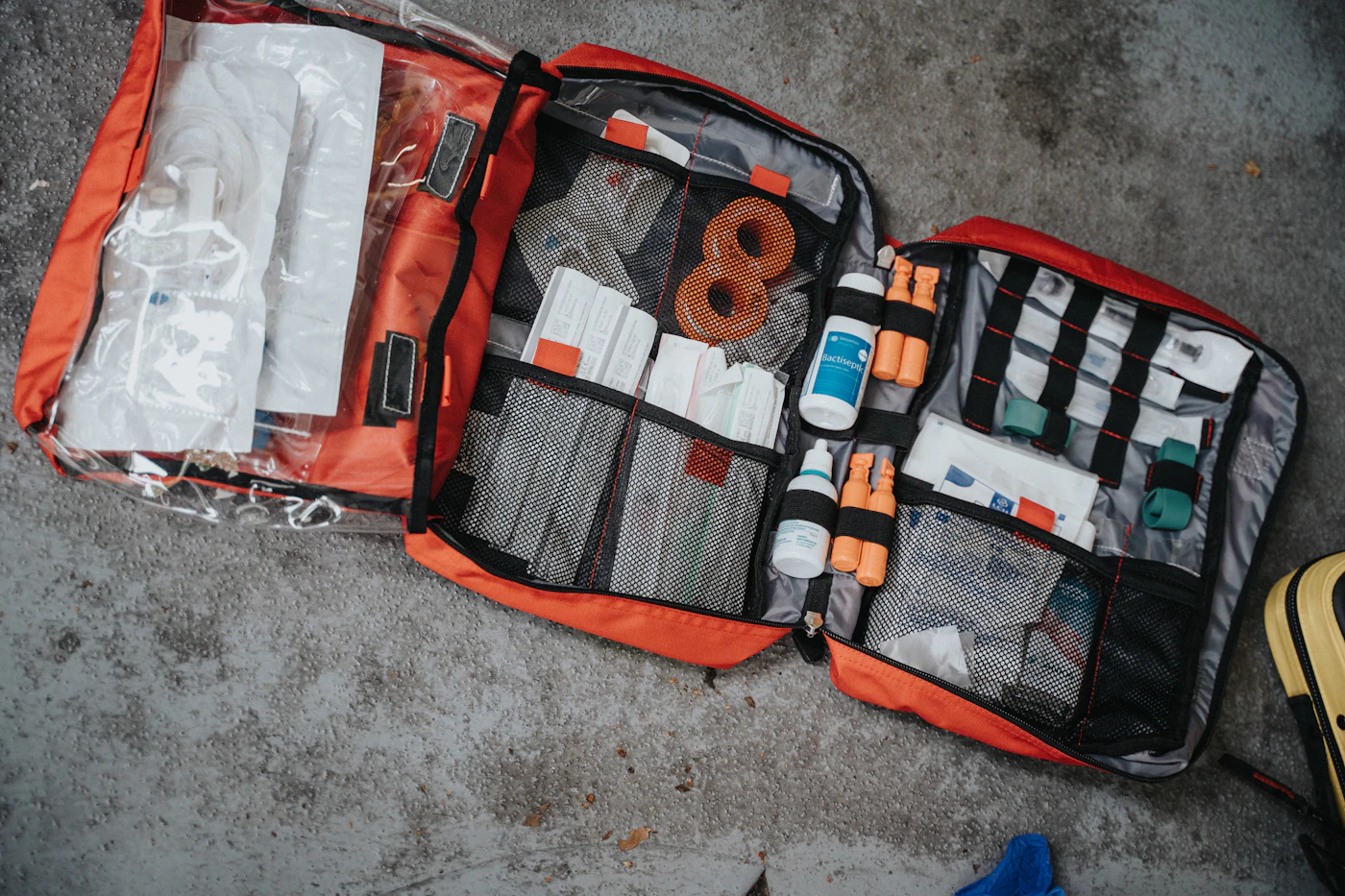
- Pack a small health kit suited to the trip. Our travel packing list covers what to bring in your hand luggage.
💡 GOOD TO KNOW
The CDC suggests a travel health kit with pain and fever medicine, diarrhoea and motion sickness medicine, a first-aid kit, insect repellent with an ingredient such as DEET or picaridin, and hand sanitiser with at least 60% alcohol. It recommends keeping prescription medicines preferably in their original containers, plus copies of your travel documents and insurance details.
Source: CDC, Pack Smart, checked 14 November 2026
Travel insurance is the other half of the health plan. Medical treatment abroad can be expensive, and many policies also cover emergency travel home, cancellation and stolen belongings. Read what’s excluded, especially for adventure activities, alcohol-related incidents and pre-existing conditions.
💡 GOOD TO KNOW
The UK government advises getting travel insurance as soon as you book, not just before you fly, so you’re covered if you have to cancel. It says to check the policy covers every place you’ll visit, the full length of the trip and the activities you plan, and to tell your insurer about any medical conditions.
Source: GOV.UK, Foreign travel checklist, checked 14 November 2026
This is general information, not medical advice. Speak to a doctor, pharmacist or travel clinic about vaccines, malaria tablets and medicines for your own trip.
Protect your documents, money and phone
Losing a passport, wallet or phone is far more likely than anything dramatic, and the damage depends on how well you prepared. GOV.UK recommends having a backup way to reach key details such as your accommodation, flights and passport, and making sure you can cover unexpected costs if your main payment method fails.
| What to protect | Simple step before you go | Why it helps |
|---|---|---|
| Passport | Save a photo or scan in secure cloud storage; carry a second photo ID | Speeds up an emergency travel document if it’s lost or stolen |
| Bookings and insurance | Keep offline copies on your phone and a printed copy of the insurance policy | You can reach them with no signal or a dead phone |
| Cards and cash | Carry two cards from different accounts and keep them in different places | One loss or block doesn’t leave you without money |
| Phone | Set a screen lock, enable remote locate/wipe, download offline maps | Limits data theft and keeps you navigating without data |
| Emergency contacts | Write key numbers on paper as well as in your phone | Works if your phone is lost, stolen or out of battery |
For the money side in more detail, including how much cash to carry and how to avoid bad exchange rates, see our guide to paying and carrying cash abroad.
Getting around safely
If you take one safety habit from this guide, make it this one: take road travel seriously. Travellers often worry about crime and forget that the car, taxi or scooter ride is usually the bigger risk.
📊 TRAVEL INSIGHT
Motor vehicle crashes were the leading cause of non-natural deaths among US citizens abroad in 2019–2021, accounting for 26% of them, according to the CDC. Worldwide, the WHO estimates about 1.16 million people die in road traffic crashes each year.
Source: CDC Yellow Book, Injury and Death During Travel and WHO, Road traffic injuries, checked 14 November 2026
The CDC’s road safety advice for travellers comes down to a few rules:
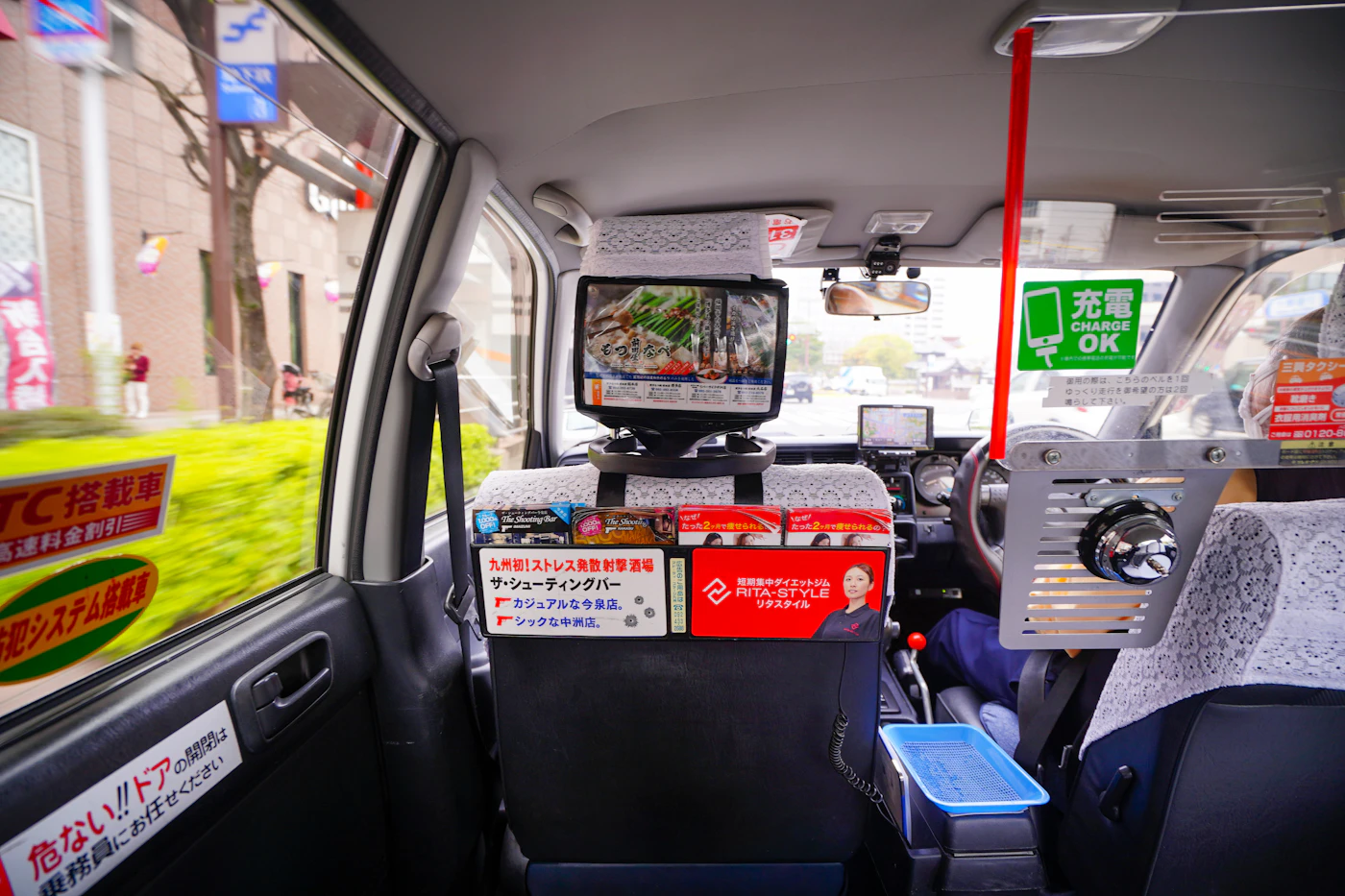
- Always wear a seatbelt, including in taxis, and use proper car or booster seats for children.
- Only ride in marked taxis or rides booked through an official app or desk.
- Avoid driving at night, especially in unfamiliar or rural areas.
- Skip motorcycles and scooters if you can; if you ride, wear a helmet.
- Avoid overcrowded or top-heavy buses and vans, and never drink and drive.
If you plan to drive, check whether you need an International Driving Permit and learn the local traffic rules before you pick up the car.
Day-to-day and night-time safety
Most everyday safety is about not standing out as an easy target and keeping your options open.
- Keep valuables out of sight. Carry only the cash and cards you need for the day, and use a bag that closes.
- Be wary of unsolicited help. Common tricks include “helpers” at ATMs, unofficial guides and offers that feel rushed. If in doubt, walk away.
- Watch your drink. GOV.UK warns travellers to stay alert to drink spiking and methanol poisoning; buy drinks from reputable venues and be cautious with cheap or unlabelled spirits.
- Check your accommodation. Know the fire exits, and GOV.UK suggests learning the signs of carbon monoxide poisoning; a portable CO alarm is a small, cheap extra.
- Respect the water. The CDC calls drowning a leading cause of injury death for US travellers in destinations where water recreation is a major activity. Swim at lifeguarded beaches and heed flags.
- Plan your way home at night before you go out, and keep your phone charged.
Travelling alone? Our first solo trip guide adds tips for planning and checking in when there’s no one else to watch your back.
If something goes wrong abroad
A calm, ordered response saves time and money. Work through these in order of urgency:
- Get safe and call the local emergency number if anyone is hurt or in danger.
- Call your insurer’s emergency assistance line before arranging major treatment, if you can; many policies require it.
- Freeze or cancel lost cards in your banking app, then switch to your backup card.
- Report theft to the local police and keep a copy of the report for insurance claims.
- Contact your embassy or consulate for a lost passport or serious trouble. The UK’s FCDO in London takes calls 24 hours a day.
💡 GOOD TO KNOW
112 is the European emergency number, available everywhere in the EU free of charge from landlines and mobiles. Some countries outside the EU use it too, but many have their own numbers, so look up the local number for each country before you travel.
Source: European Commission, 112 the European emergency number, checked 14 November 2026
Travel safety checklist
Save or screenshot this checklist and run through it before each trip.
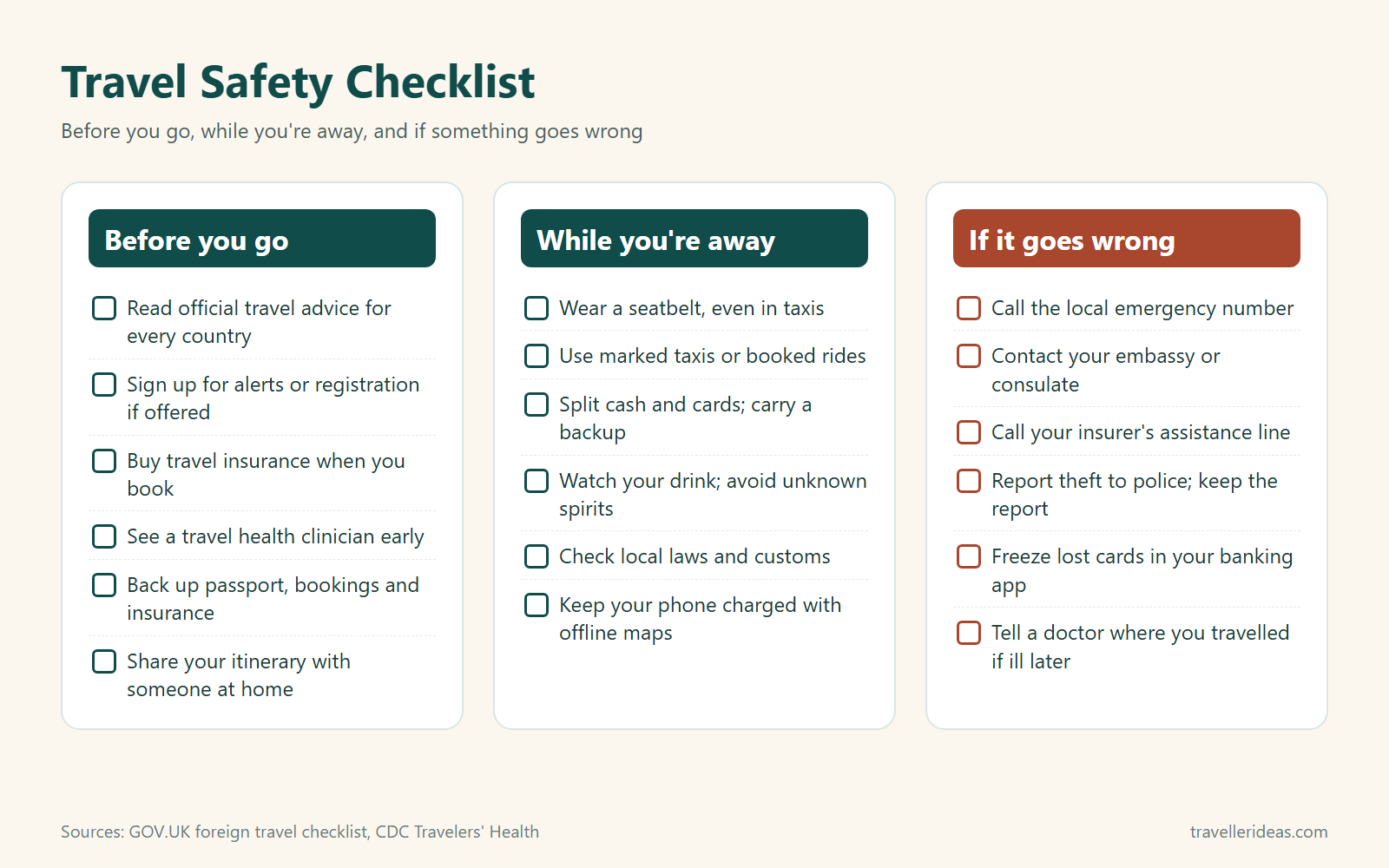
After you get home, check your bank statements for unfamiliar charges, and if you feel unwell in the weeks after a trip, tell your doctor where you travelled.
Plan Your Next Trip
Pair your safety prep with the rest of your pre-trip planning:
Travel safety FAQ
How can I stay safe while travelling abroad?
Read your government’s travel advice for each country, buy travel insurance when you book, and back up your documents before you go. While you’re away, take road safety seriously, split your cash and cards, watch your drink and keep emergency numbers saved on paper and on your phone.
Should I register with my embassy before I travel?
If your government offers a registration or alert service, it’s worth using. Canada’s Registration of Canadians Abroad is free and lets the government contact you in an emergency, and GOV.UK lets you sign up for email alerts for each country’s travel advice.
What is the emergency number in Europe?
The emergency number across the EU is 112, and it’s free from landlines and mobiles. Some non-EU countries use it too, but many have their own numbers, so look up the local number for each country you visit.
Are taxis safe to use abroad?
Marked, licensed taxis and rides booked through an official app or desk are generally the safer choice. The CDC advises riding only in marked taxis and always wearing a seatbelt when one is available.
What should I do if my passport is lost or stolen abroad?
Report it to the local police and contact your nearest embassy or consulate, which can usually issue an emergency travel document. A saved photo or scan of your passport and a second photo ID can speed the process up.
Do I really need travel insurance?
For most international trips it’s strongly advisable, because medical treatment and emergency travel home can be very expensive. The UK government advises buying it as soon as you book and checking it covers your destinations, trip length, activities and any medical conditions.
The Bottom Line
Good travel safety is mostly preparation: official advice read, insurance bought early, documents backed up, money split, and emergency numbers saved. On the road, respect traffic, water and alcohol risks more than you fear rare dramatic ones, and you’ll avoid most of what actually goes wrong for travellers.
Last updated: 14 November 2026. Travel advice, health guidance and emergency numbers change, so confirm the details for your destination with the official sources linked above before you travel.