
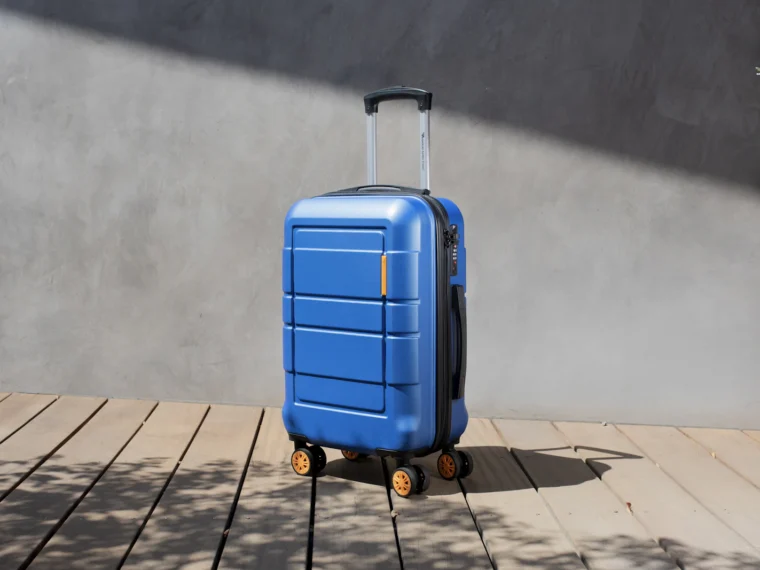
Learning how to travel carry-on only is mostly about three checks and one habit. The checks: what your fare includes, the size and weight limits of every airline on your route, and the liquids and battery rules at security. The habit: packing for a week, not for the whole trip, and doing laundry on the way.
This guide covers all of it, with real cabin bag limits from three airlines (checked 25 November 2026). It also tells you, candidly, when carrying everything yourself isn’t worth it.
The Quick Answer
To travel carry-on only, first confirm that your fare includes a full-size cabin bag, not just an under-seat item. Then check the size and weight limits for every airline on your route. Pack a small mix-and-match wardrobe for about a week and plan to do laundry. Wear your bulkiest layers on the plane, and decant toiletries into containers of 100 ml or less. Keep power banks and spare batteries with you at all times. If you need bulky gear, full-size liquids or items banned from hand luggage, check a bag instead.
On this page
- Is carry-on only right for your trip?
- Check your cabin bag allowance first
- How to travel carry-on only: the packing method
- Build a small capsule wardrobe
- Wear the bulk and plan laundry
- Use your personal item well
- Liquids, batteries and sharp items
- When carry-on only isn’t worth it
- Carry-on only FAQs
- The bottom line
Is carry-on only right for your trip?
Carry-on only shines on city breaks, multi-stop trips and itineraries with tight connections. You walk straight out on arrival, you can change plans without a bag stuck in the system, and you’re never waiting at a carousel that has stopped moving.
The trade-off is space and freedom. You carry everything, you repack liquids for every security check, and some fares charge for a full-size cabin bag anyway. Here’s how the two options compare.
| Factor | Carry-on only | Checking a bag |
|---|---|---|
| On arrival | Walk straight out | Wait at the carousel |
| Lost or delayed bags | Bag stays with you (unless it’s checked at the gate) | Some risk, especially on connections |
| Liquids | Containers of 100 ml at most airports | Full-size bottles allowed (check airline rules) |
| Space and weight | Tight; some airlines set a weight limit | Much more room, within the airline’s limit |
| Cost | Depends on the fare; some charge for a full-size cabin bag | Often an extra fee on cheaper fares |
| Carrying | You lift it into the overhead bin yourself | Only to and from the check-in desk |
📊 TRAVEL INSIGHT
SITA, the air transport IT company, reports that about 24 million bags were mishandled in 2025, while 5 billion passengers flew. The rate fell 23% in a year, so the odds for any one bag are small. Transfers caused 39% of cases, which is why carry-on only appeals most on itineraries with connections.
Source: SITA, 2026 Baggage IT Insights news release, checked 25 November 2026
Check your cabin bag allowance first
There’s no universal carry-on size. GOV.UK simply tells travellers to check with their airline how many bags, and what size, they can take on board. Limits differ between airlines and sometimes between fares on the same flight.
These three examples show how much they vary. They are not a recommendation of any airline.
| Airline (cabin or fare) | Main cabin bag | Smaller item | Weight |
|---|---|---|---|
| American Airlines | 1 bag up to 56 × 36 × 23 cm (22 × 14 × 9 in), including handles and wheels | 1 personal item up to 45 × 35 × 20 cm (18 × 14 × 8 in), under the seat | No limit given on its carry-on page |
| Emirates (Economy) | 1 bag up to 55 × 38 × 22 cm | Not listed for Economy on its cabin baggage page | 7 kg |
| easyJet (standard fare) | Large cabin bag up to 56 × 45 × 25 cm only if you book one or your fare or membership includes it | 1 free under-seat bag up to 45 × 36 × 20 cm | Up to 15 kg for the under-seat bag |
Notice the easyJet row: on its standard fare, the free bag is the small one under the seat. easyJet says a large cabin bag added at the boarding gate costs £60, more than adding one online. If you plan to travel with a wheeled cabin case, price that in when you compare fares.
💡 GOOD TO KNOW
On a codeshare, your allowance may not be the one you expect. British Airways says flights operated by partner airlines can have different allowances, even under a BA flight number. When a connecting journey mixes BA and other airlines, it says the allowance is generally set by the airline operating the longest flight.
Source: British Airways, Your baggage essentials, checked 25 November 2026
How to travel carry-on only: the packing method
Start from our smart packing checklist for any trip, then cut it down with the steps below. The aim is a bag you can lift, close without a fight, and live out of for a week or a month.

Build a small capsule wardrobe
Pick two or three colours that all go together, so every top works with every bottom. Choose fabrics that dry overnight and don’t show creases. Then pack for about a week, however long the trip is.
| Item | How many | Why it earns its space |
|---|---|---|
| Tops | 4–5 | Mix of short and long sleeves; one smarter option |
| Bottoms | 2–3 | One you wear on the plane, one or two in the bag |
| Underwear and socks | 5–7 sets | Quick-dry pairs can be washed in a sink |
| Warm layer | 1 | A fleece or light sweater covers planes and cool evenings |
| Rain or wind jacket | 1 | Worn or carried, not folded at the bottom of the bag |
| Shoes | 2 pairs | Wear the bulkier pair; pack one light pair |
| Sleepwear and swimwear | 1 each | Only if your trip needs them |
Wear the bulk and plan laundry
- Wear your heaviest items: boots, jacket and thickest layer go on your body, not in the bag.
- Book one laundry stop a week: a stay with a washing machine, a laundrette or a hotel laundry service.
- Pack a small laundry kit: a few detergent sheets or a solid bar take up less room than a bottle.
- Buy, don’t carry: sunscreen, shampoo and other basics are easy to buy in most destinations.
Use your personal item well
If your fare includes a small under-seat bag, treat it as your “never leaves me” bag. It holds your passport, medicines, phone, chargers, power bank, a layer and your liquids bag. That way, if the main bag has to go in the hold, the things you can’t replace stay with you.
Not sure which papers belong in it? Our checklist of travel documents to carry and copy covers that.
Liquids, batteries and sharp items
These are the three areas where carry-on travellers lose things at security. Each country sets its own rules, so check the airports you’re flying from, including on the way home. Our international travel checklist covers the other pre-trip checks.
- Liquids: GOV.UK says that at most airports you can’t take liquids in containers larger than 100 ml through security, even if they’re only part full. Some airports allow containers of up to 2 litres. See the 100 ml rule and its exceptions for the US, UK and EU details.
- Medicines and baby food: GOV.UK lists exemptions at UK airports for liquids needed for essential medical purposes, special dietary needs and baby food or milk. Keep essential medicines in your carry-on either way.
- Batteries: the US Federal Aviation Administration (FAA) says spare lithium batteries, including power banks and phone charging cases, must travel in carry-on baggage only. Many airlines set stricter limits on how many you can bring.
- Sharp items: under the UK hand luggage rules, scissors with blades longer than 6 cm, knives with a sharp or pointed blade, and corkscrews can’t go in hand luggage. Small scissors, tweezers and disposable razors can. Other countries draw the lines differently.
💡 GOOD TO KNOW
Full flights often end with cabin bags being checked at the gate. The FAA says that when this happens, you must take out every spare lithium battery and power bank and keep them with you. Pack them in an outer pocket so you can grab them in seconds.
Source: FAA PackSafe, Lithium batteries, checked 25 November 2026
When carry-on only isn’t worth it
Carry-on only is a tool, not a test of character. Check a bag when:
- You need bulky gear: ski or snow clothing, diving kit, a tent or other sports equipment.
- You need full-size liquids: specific skincare, contact lens solution for a long trip, or anything hard to buy where you’re going.
- You’re carrying banned items: tools, larger scissors or knives, or anything your airport won’t let through security.
- The bag is too heavy to lift: easyJet, for example, asks that you can lift and carry your cabin bag yourself.
- The cabin bag costs the same as a checked bag: if your fare charges for both, the hold may be the more comfortable choice.
Bag fees are one of the extras that quietly inflate a cheap fare, so add them to your list of hidden travel costs before you book.
💡 GOOD TO KNOW
If you do check a bag on a flight to, from or within the US, the US Department of Transportation says you’re entitled to a refund of the bag fee if the bag is significantly delayed. For domestic flights that means not delivered within 12 hours of arrival. You must file a mishandled baggage report with the airline to claim it.
Source: US Department of Transportation, Refunds, checked 25 November 2026
Plan Your Next Trip
Pair your carry-on plan with the rest of your pre-trip checks.
Carry-on only FAQs
What size is a carry-on bag?
There is no single standard size, so check your airline. As examples checked on 25 November 2026, American Airlines allows a carry-on up to 56 × 36 × 23 cm (22 × 14 × 9 in) and Emirates allows 55 × 38 × 22 cm in Economy, with a 7 kg weight limit. Some fares include only a smaller under-seat bag.
Can I take a power bank in my carry-on?
Yes, and in most cases it has to go there. The FAA says spare lithium batteries, including power banks, must travel in carry-on baggage only, and British Airways forbids power banks in checked baggage. Airlines may limit how many you bring and their capacity, so check your airline before you fly.
Does a backpack count as a personal item or a carry-on?
It depends on its size and your airline. A small backpack that fits within the personal item limit, such as 45 × 35 × 20 cm at American Airlines, can usually go under the seat. A larger backpack counts as your main cabin bag.
How long a trip can you pack for with carry-on only?
Any length, if you can do laundry. Pack clothes for about a week and wash as you go. Longer trips mostly need more planning for laundry and toiletries, not a bigger bag.
What happens if my carry-on is too big at the gate?
The airline can move it to the hold and may charge a fee. easyJet, for example, says a large cabin bag added at the boarding gate costs £60, more than adding one online. Measure and weigh your packed bag at home, wheels and handles included.
Do the 100 ml liquid rules still apply to carry-on bags?
At most airports, yes. GOV.UK says most airports still limit liquids to containers of 100 ml, although some airports allow containers of up to 2 litres. Check the rules for every airport on your route, including your return flight.
The Bottom Line
Carry-on only works best when you check the boring details before you pack: what your fare includes, each airline’s size and weight limits, liquids and batteries. Pack for a week, wear the bulk and plan a laundry stop. If the trip needs bulky gear or full-size liquids, check a bag without guilt.
Last updated: 25 November 2026. Cabin bag limits, fees and security rules change and vary by airline, fare and airport, so confirm with the official sources linked above and your airline before you fly.


