Most tourist scams aren’t clever. They work because you’re tired, distracted, in a hurry or trying to be polite in an unfamiliar place. Knowing the common tourist scams in advance takes most of their power away: once you recognise the pattern, saying no is easy.
Every scam below is described in current UK government travel advice, with the country it was reported in. The same tricks turn up in many places, so use the examples to learn the pattern, then check the official advice for your own destination.
The Quick Answer
The most common tourist scams include unlicensed taxis that inflate fares, fake police who ask to see your wallet, distraction thefts by teams, strangers who lure you to bars or offer spiked drinks, unofficial money changers with counterfeit notes, and rental companies that hold your passport against invented damage. Use official taxis, banks and exchange offices, never hand over your wallet or passport, keep valuables spread out, and walk away from anyone who pressures or rushes you.
On this page
- Common tourist scams at a glance
- Taxi and transport scams
- Fake police and “officials”
- Distraction thefts and fake car trouble
- Money changers and counterfeit notes
- Friendly strangers, bars and spiked drinks
- Rental deposits and passport holding
- How to avoid scams abroad
- Tourist scams FAQ
- The bottom line
Common tourist scams at a glance
| Scam | How it works | How to avoid it | Reported in (GOV.UK) |
|---|---|---|---|
| Unlicensed taxi fare inflation | Driver adds extra digits to the fare | Use official ranks, booths or apps | Chile (Santiago Airport) |
| Fake police | “Officers” ask to see your wallet for ID | Never hand over your wallet; offer to go to a police station | Spain |
| Distraction theft | A team distracts you while one person steals | Spread valuables; stay alert at busy moments | Spain, Italy |
| Fake car trouble | Someone flags you down over a “fault” or “damage” | Only stop somewhere public and well-lit | Spain, Italy |
| Unofficial money changers | Counterfeit notes or a bad rate | Use banks or official exchange offices | Spain, Turkey |
| Lures and spiked drinks | A stranger leads you to a bar or offers food or drink | Decline; buy your own drinks and keep them in sight | Turkey, Spain, Thailand, Italy |
| Passport held as a rental deposit | Rental firm keeps your passport against claimed damage | Never leave your passport as a guarantee | Thailand |
Sources: GOV.UK safety and security advice for Chile, Spain, Italy, Turkey and Thailand, checked 14 November 2026.
Taxi and transport scams
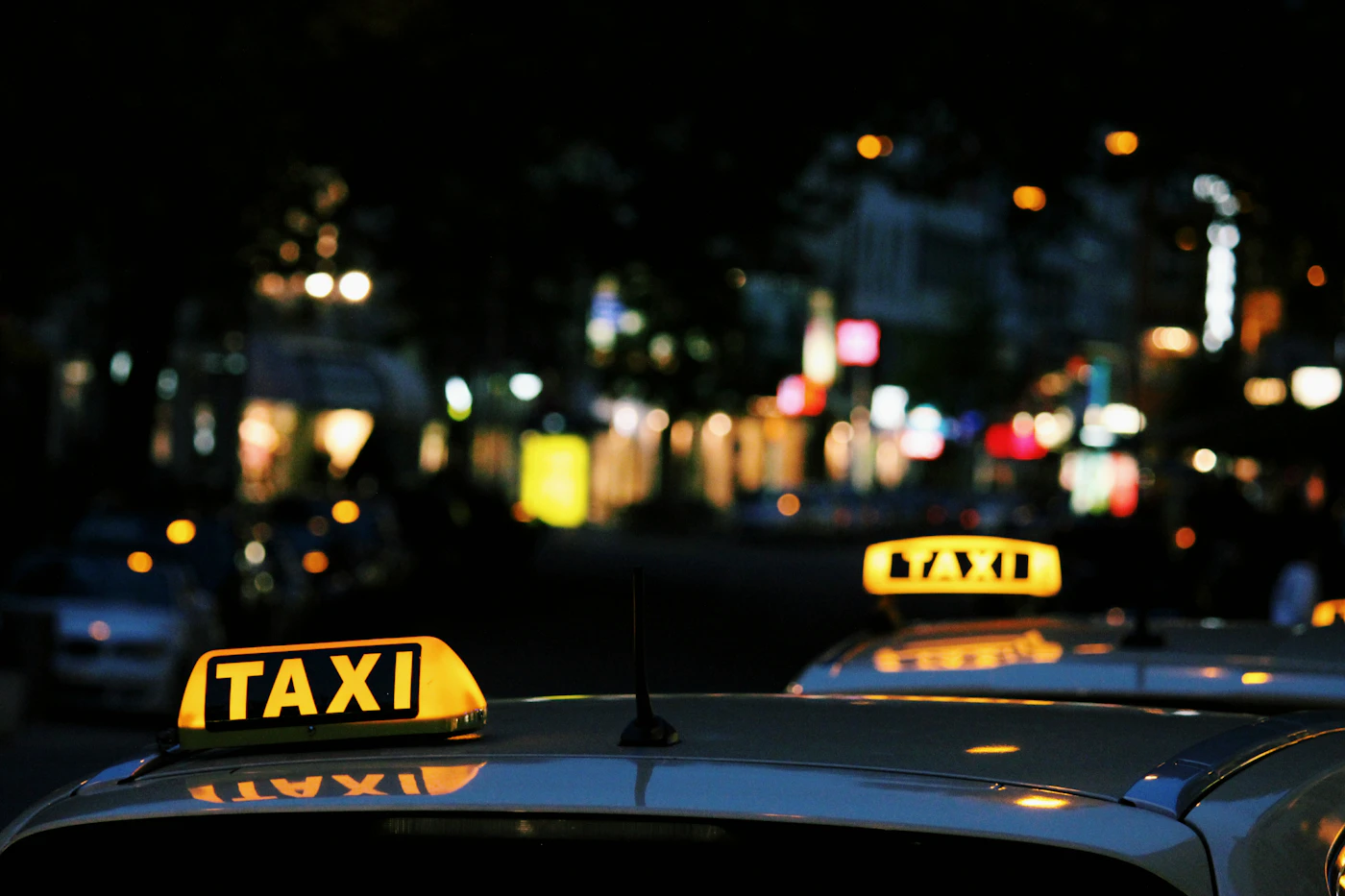
Arrivals halls are prime territory, because you’re tired, carrying luggage and don’t yet know local prices. The classic trick is an unlicensed driver who approaches you, then overcharges at the end of the ride.
💡 GOOD TO KNOW
GOV.UK warns that unlicensed taxi drivers at Santiago Airport in Chile add extra digits to the fare, for example charging 5,000,000 Chilean pesos instead of 50,000. It also advises that if a driver takes you to an ATM to pay, you should not let them near the machine while you use it.
Source: GOV.UK, Chile safety and security, checked 14 November 2026
- Use official taxi ranks, airport booths or ride-hailing apps, and ignore drivers who approach you.
- Check the price or meter before you set off, and read the amount carefully before you pay by card.
- Know roughly what the trip should cost from your hotel or the airport’s website.
Fake police and “officials”
An official-looking person who asks to inspect your wallet, cards or cash is a well-known trick. The aim is to palm notes or cards while “checking” them.
💡 GOOD TO KNOW
For Spain, GOV.UK warns that thieves posing as police officers may ask to see your wallet, claiming they need it for identification. Real officers may ask for ID, but they won’t ask for your wallet or purse. It also flags people posing as plainclothes police in unmarked cars.
Source: GOV.UK, Spain safety and security, checked 14 November 2026
If you’re unsure, show a photocopy of your passport rather than your wallet, and offer to sort things out at the nearest police station.
Distraction thefts and fake car trouble
GOV.UK says thieves in Spain use distraction techniques and often work in teams, and its Italy advice also warns about thieves using distraction techniques. The distraction might be a question, a commotion or someone bumping into you, while an accomplice goes for your bag or phone. Take extra care at busy moments such as collecting luggage, checking in, or arranging car hire.
Drivers face a version of this too. GOV.UK warns about people flagging down cars by pointing out a made-up fault (Spain and Italy) or claiming you damaged their vehicle (Spain). Spain’s advice notes that “highway pirates” target foreign-registered and hire cars. If you need to check your car, drive on and stop somewhere public and well-lit, such as a service station.

Money changers and counterfeit notes
A stranger offering a great exchange rate on the street is almost always a bad deal. GOV.UK’s Spain advice warns that unofficial money changers may give you counterfeit money, and its Turkey advice says to be wary of strangers who approach you to change money. It also notes that some banks and exchanges in Turkey may not accept US$50 and US$100 bills because of counterfeits.
Change money at banks, official exchange offices or bank ATMs, and count it before you walk away. For more on getting and carrying cash safely, see our travel money tips.
Friendly strangers, bars and spiked drinks
Some scams start with genuine-seeming friendliness. GOV.UK’s Turkey advice warns about strangers who approach you to take you to a restaurant or nightclub, and says food and drink offered by strangers could be spiked. Its advice for Spain, Italy and Thailand also tells travellers not to accept drinks from strangers or leave drinks unattended.
- Choose your own venues rather than following a new “friend”.
- Buy your own drinks and keep them in sight.
- Check prices before you order and look at the bill before you pay.
Rental deposits and passport holding
Renting a scooter, motorbike or jet ski can go wrong when the company claims you caused damage that was already there, then won’t return your deposit or documents until you pay.
💡 GOOD TO KNOW
GOV.UK’s Thailand advice says not to hand over your passport as a guarantee, for example to motorcycle or jet-ski rental businesses, because companies may hold on to passports against claimed damage. Photograph or film the vehicle before you ride, and agree any deposit in writing.
Source: GOV.UK, Thailand safety and security, checked 14 November 2026
How to avoid scams abroad
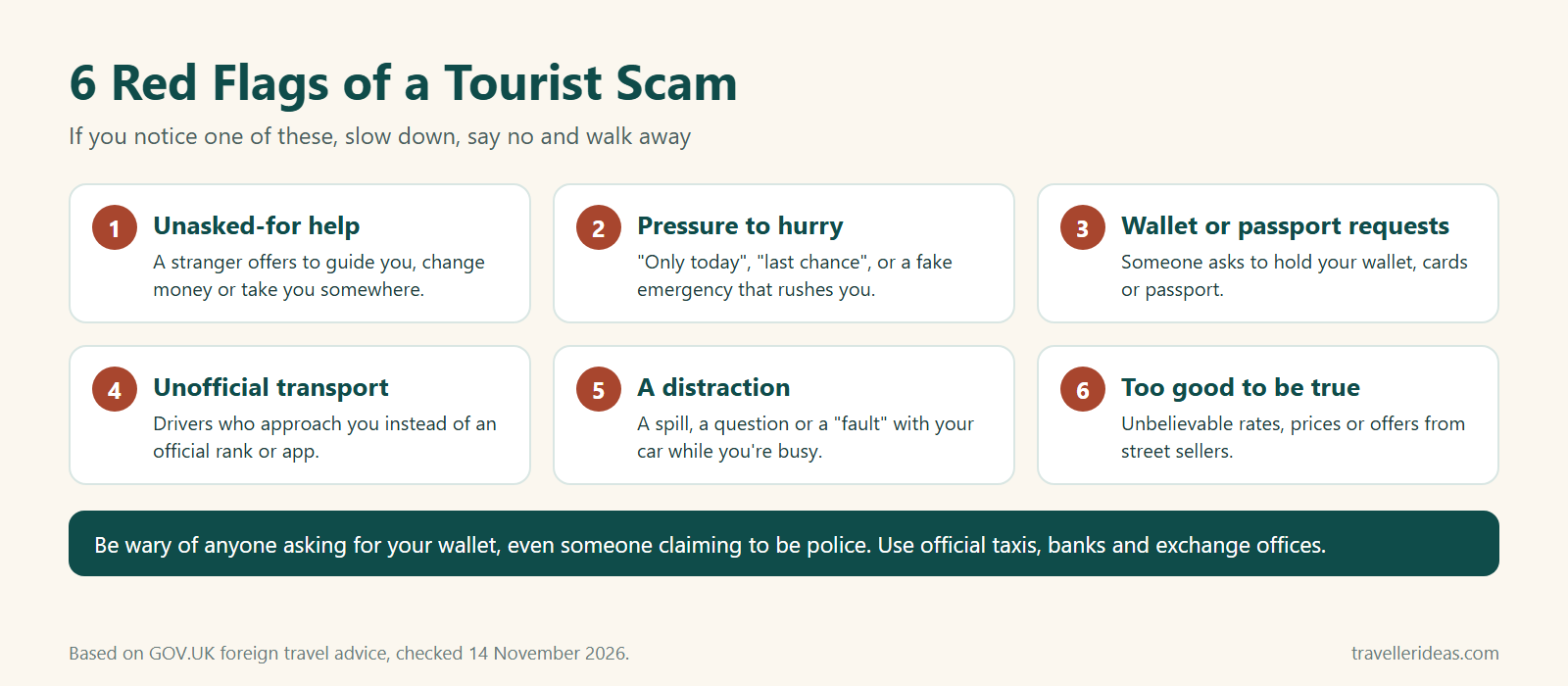
The details change from place to place, but the warning signs are remarkably consistent.
- Read your destination’s official travel advice before you go; the safety section usually lists local scams.
- Spread your valuables across several places and carry only what you need for the day.
- Use official services: licensed taxis, banks, exchange offices and reputable rental firms.
- Never hand over your wallet or passport to a stranger or as a deposit.
- Slow down. Pressure and urgency are the scammer’s tools; it’s fine to be rude and walk away.
- If you’re scammed, report it to the local police, keep the report for insurance, and freeze any cards involved.
Scam awareness is one part of a wider safety plan. Our international travel checklist covers documents, insurance and emergency contacts, and if you’re heading off alone, the first solo trip guide has extra tips.
Plan Your Next Trip
Travel smarter and safer with these guides:
Tourist scams FAQ
What are the most common tourist scams?
Common ones include unlicensed taxis that inflate fares, fake police asking to see your wallet, distraction thefts by teams, strangers who lure you to bars or offer spiked drinks, unofficial money changers, and rental firms that hold your passport against claimed damage. Your destination’s official travel advice usually lists the local versions.
How do I avoid taxi scams abroad?
Use official taxi ranks, airport booths or ride-hailing apps, and ignore drivers who approach you. Agree the price or check the meter before setting off, and read the amount carefully before paying.
What should I do if someone claiming to be police asks for my wallet?
Don’t hand it over. GOV.UK notes for Spain that real officers may ask for ID but won’t ask for your wallet; offer a copy of your passport or suggest going to a police station instead.
Is it safe to exchange money on the street?
No, it’s best avoided. Unofficial money changers may give you counterfeit notes or a bad rate, so use banks, official exchange offices or bank ATMs.
Should I leave my passport as a deposit when renting a scooter?
No. GOV.UK advises against handing over your passport as a guarantee to rental businesses, because some hold on to passports against claimed damage.
What should I do if I get scammed abroad?
Get somewhere safe, report it to the local police and keep a copy of the report for your insurer. Freeze any cards involved in your banking app, and contact your embassy if your passport was taken.
The Bottom Line
Most tourist scams rely on the same few levers: unofficial services, unasked-for help, pressure and distraction. Use official taxis and money changers, keep your wallet and passport to yourself, read the local scam warnings before you go, and don’t be afraid to walk away.
Last updated: 14 November 2026. Scams change and differ by destination, so check the current official travel advice for where you’re going, using the sources linked above.