
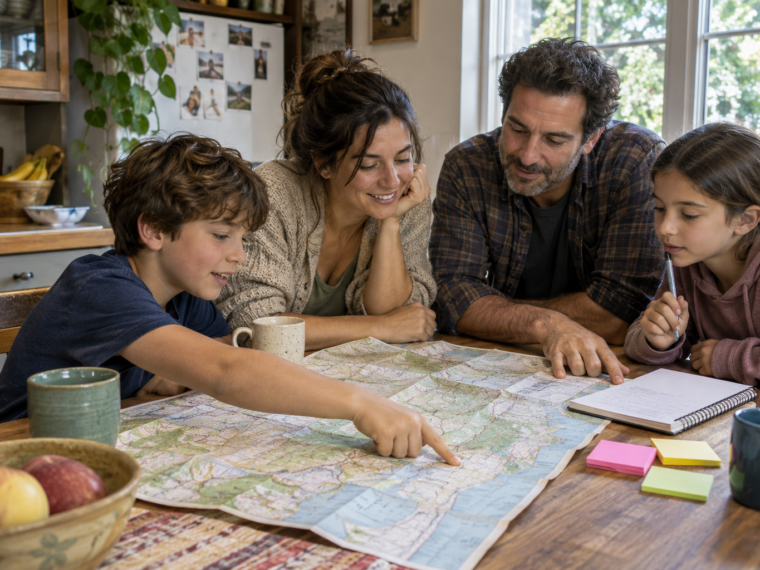
Family trip planning works best when you decide what matters most, set a realistic total budget, and leave open space in the itinerary. Choose transport and accommodation around your family’s ages and needs, plan one main activity most days, and keep documents, medication, snacks, and a backup plan easy to reach. A good family holiday does not require every hour to be booked—especially the hours when everyone needs a snack.
The Quick Answer
Before booking, agree on your total spending limit, the kind of trip everyone wants, and what would make the days manageable. Then price the big costs, check entry and health requirements for your destination, and build a flexible plan with breaks.
Travel insight: A short conversation before booking can prevent a long negotiation beside the hotel pool. Ask each traveller to name one must-do and one thing they would rather skip.
Start family trip planning with your priorities
Begin with the practical details: who is travelling, their ages, the dates you can go, and how much time you have. A toddler, a teenager, and a grandparent may all enjoy the same destination, but probably not the same 8 a.m. start.
Ask everyone for one or two priorities. These might be a beach day, a museum, a pool, seeing relatives, or simply an afternoon without a timetable. Use those answers to narrow the destination before you compare flights and hotels.
If the group is split, look for a place with different kinds of activities nearby. That gives people options without turning every day into a family summit.
Set a budget that leaves room to breathe
Set a total limit first, then estimate the largest expenses: transport, lodging, meals, local travel, and activities. Add a contingency amount for things you could not reasonably predict, such as a missed connection, a replacement charger, or the family discovering that airport sandwiches have their own economic system.
The worksheet below is a blank planning template, not a destination price estimate. Fill it with current quotes for your chosen dates and party size; costs vary by location, season, age, and travel style.
| Cost category | Planned amount | Actual amount |
|---|---|---|
| Transport to and from destination | ___ | ___ |
| Accommodation, taxes and required fees | ___ | ___ |
| Meals and snacks | ___ | ___ |
| Local transport and transfers | ___ | ___ |
| Activities and tickets | ___ | ___ |
| Travel insurance and documents | ___ | ___ |
| Child-specific needs, such as equipment rental | ___ | ___ |
| Contingency | ___ | ___ |
| Total | ___ | ___ |
For ideas on setting priorities and protecting the essentials, see our budget travel planning guide.
Choose transport and accommodation for your family
Compare the whole journey, not only the ticket price. Include transfers, baggage, seat choices, travel time, and how your family will handle meals or naps en route.
For accommodation, check the details that affect your group: sleeping arrangements, kitchen or laundry access, stairs or lifts, distance to transit, and cancellation terms. “Sleeps five” can mean five people sharing one room, so inspect the room layout before you pay.
Choose convenience where it will reduce real friction. A slightly more expensive place near transport may work better than a bargain that requires multiple daily transfers—though the right choice depends on your budget and destination.
Build a flexible family itinerary
Plan one main activity each day, then treat anything extra as a bonus. Leave time for meals, rest, weather changes, and the occasional search for the water bottle that was definitely packed.
- Morning: one planned outing while everyone is fresh.
- Midday: lunch and a slower break near your accommodation.
- Afternoon: optional activity, pool, park, or free time.
- Evening: easy dinner and an early night when needed.
Morning outing → lunch and rest → optional afternoon → easy evening
For a two- or three-day trip, our weekend getaway planning guide can help you keep the schedule compact.
Good to know: Keep a low-effort backup for each day, such as an indoor attraction or time at the accommodation. Check opening days and booking requirements directly with the attraction before you travel.
Pack for the children you have
Pack for your actual itinerary and children’s needs, rather than every hypothetical emergency in the family group chat. Keep essentials in your day bag: snacks, water, a change of clothes for young children, any required medication, wipes, and something small to occupy them during waits.
Before departure, check baggage limits with your airline or transport provider. If you need a stroller, car seat, or other equipment, confirm whether it can be brought, checked, or rented—and what the arrangement costs.
Documents, health and safety
Check entry rules for each traveller’s nationality and destination, including children. Some destinations have extra consent or custody-document requirements when a minor travels with one parent or another adult; requirements vary, so confirm them with the destination’s official authority and your airline. The U.S. State Department’s guidance for travelling with minors explains examples relevant to U.S. travellers.
For destination-specific health guidance, review the CDC’s 2026 travel advice for infants and children and speak with a qualified health professional when you need advice for your family. Requirements and recommendations can depend on the destination, itinerary, and individual health needs.
Our international travel checklist is a useful companion for organizing documents and pre-departure tasks.
FAQs
How far in advance should I plan a family trip?
Start once you know your likely dates and destination, especially if school holidays or limited accommodation options matter. Check current booking terms before paying, since cancellation and change policies vary.
How many activities should we plan each day?
A practical starting point is one main activity per day, with optional extras. Adjust for your children’s ages, the travel time involved, and how much downtime your family needs.
How can I keep a family vacation within budget?
Set a total limit, price transport and lodging first, and estimate meals, local travel, activities, documents, and a contingency amount. Compare the complete cost of each option, including fees and transfers.
What documents might children need to travel?
It depends on the travellers’ nationalities, destination, and who is accompanying the child. Check official destination guidance and your airline’s requirements; some journeys may require additional consent or custody documents.
Should I plan a rest day on a family holiday?
If your schedule includes long journeys, time-zone changes, or several busy outings, a slower day can make the rest of the trip easier. It can be as simple as a shorter outing and an unplanned afternoon.
Information checked November 10, 2026. Travel requirements and health advice can change; verify them with official sources before departure.