This Emirati food guide covers the dishes behind the Gulf’s shawarma and biryani stands: machboos, the closest thing the UAE has to a national dish, a wheat porridge served at weddings, and doughnuts drizzled in date syrup. Emirati cooking is harder to find than international cuisine in Dubai, but a handful of restaurants and cultural experiences make it genuinely easy once you know where to look. Pair it with our UAE travel guide for the wider trip.
The Quick Answer
Try machboos (spiced rice with meat), harees (a wheat and meat porridge), luqaimat (fried dumplings in date syrup) and balaleet (sweet vermicelli with egg) at Al Fanar Restaurant and Café, with branches in Dubai, Abu Dhabi and Sharjah, or Logma for a more modern take on Emirati breakfast. Emirati food is aromatic rather than spicy, built on rice, wheat, dates, seafood and slow-cooked meat.
On this page
- Emirati food at a glance
- Machboos
- Karak tea
- Regional variations
- Harees and thareed
- Balaleet and breakfast dishes
- Luqaimat and sweets
- Gahwa and dates
- Shuwaa
- Emirati dining etiquette
- Where to eat Emirati food
- The modern Emirati dining scene
- FAQs
Emirati Food at a Glance
Emirati cooking draws on Bedouin, coastal and trading histories: rice, wheat and dates from inland and overland trade, fish and seafood from the coast, and spices like saffron, cardamom and dried lime (loomi) brought in through centuries of trade across the Gulf and Indian Ocean. The food is aromatic rather than hot, built for sharing, and heavily tied to hospitality, family gatherings and Ramadan.
Machboos
Machboos, also written majboos, is the closest thing the UAE has to a national dish: rice slow-cooked with chicken, lamb or fish, layered with spices and often coloured and flavoured with saffron and dried lime (loomi). It is the dish most restaurants lead with, and the one to order if you only try one Emirati dish on a trip.
💡 GOOD TO KNOW
Fish machboos, often made with hammour or kingfish, is less commonly offered than the chicken or lamb versions, so it is worth asking for specifically if you see it on a menu.
Source: Visit Abu Dhabi
Karak Tea
Karak is everywhere in the UAE, spiced milk tea brewed strong with cardamom, saffron or ginger and sweetened heavily, sold from tiny roadside stalls as much as proper cafes. It is not strictly native Emirati, its roots trace to South Asian tea culture brought by generations of expatriate workers, but it has become so woven into daily life across the Emirates that most visitors encounter it before anything else on this list.
A karak and a plate of chebab or khameer bread is a genuinely common, inexpensive breakfast combination, and a good way to ease into Emirati flavours before trying heavier dishes like harees or machboos.
Regional Variations Within the UAE
Emirati food is not perfectly uniform across the seven emirates. Coastal communities in Fujairah and Ras Al Khaimah lean more heavily on fresh seafood in their machboos and grilled fish dishes, while inland areas like Al Ain have historically relied more on dates, dairy and wheat given the oasis agriculture there. The differences are subtle rather than dramatic, but they explain why the same dish can taste noticeably different depending on which emirate’s restaurant or household prepared it.
Harees and Thareed
Harees is a porridge-like dish of cracked wheat slow-cooked with meat and ghee until smooth, traditionally associated with weddings, religious occasions and Ramadan. Thareed is a different, bread-based stew, thin crispy flatbread called rigag soaked in a meat and vegetable broth, sometimes described as the dish the Prophet Muhammad praised as the finest of foods.
- Harees: wheat and meat, cooked until porridge-smooth, usually around AED 45 in restaurants.
- Thareed: bread stew with rigag, chicken or lamb broth, carrots, potatoes and leeks.
- Fareed: a close relative of thareed, sometimes used interchangeably depending on the region.
Sources: Nomado Travel, Property Finder, Visit Abu Dhabi
Balaleet and Breakfast Dishes
Balaleet is the classic Emirati breakfast: sweet vermicelli noodles cooked with sugar, cardamom and saffron, served with a savoury fried egg on top, an unusual but well-loved combination of sweet and savoury. Chebab, thick Emirati pancakes, and khameer, a slightly sweet bread, round out a typical breakfast spread, usually alongside cheese, honey and karak tea.
Sources: Visit Ras Al Khaimah, Nomado Travel
Luqaimat and Sweets
Luqaimat are small, deep-fried dumplings, crisp outside and soft inside, drizzled with date syrup (dibs) and sometimes sesame seeds. They are sold everywhere from casual cafes to five-star hotel iftar buffets, and are usually the easiest, most universally liked introduction to Emirati desserts for first-time visitors.
Source: Visit Ras Al Khaimah
Gahwa and Dates
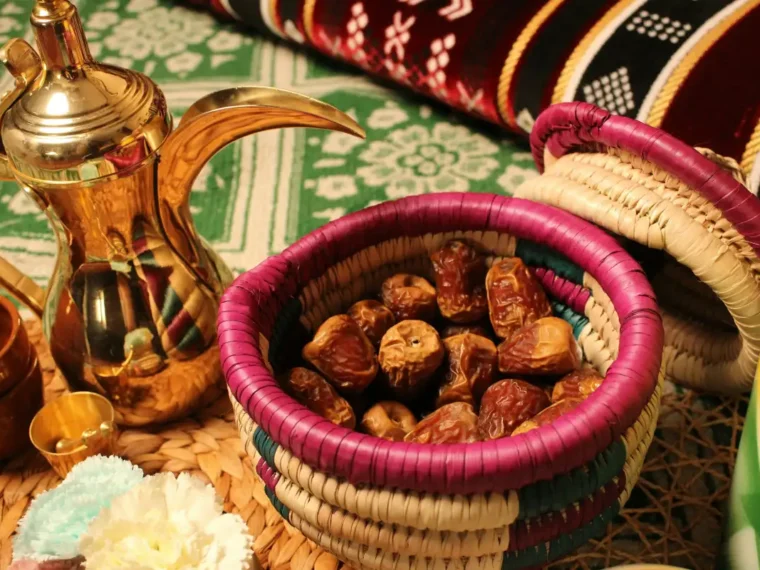
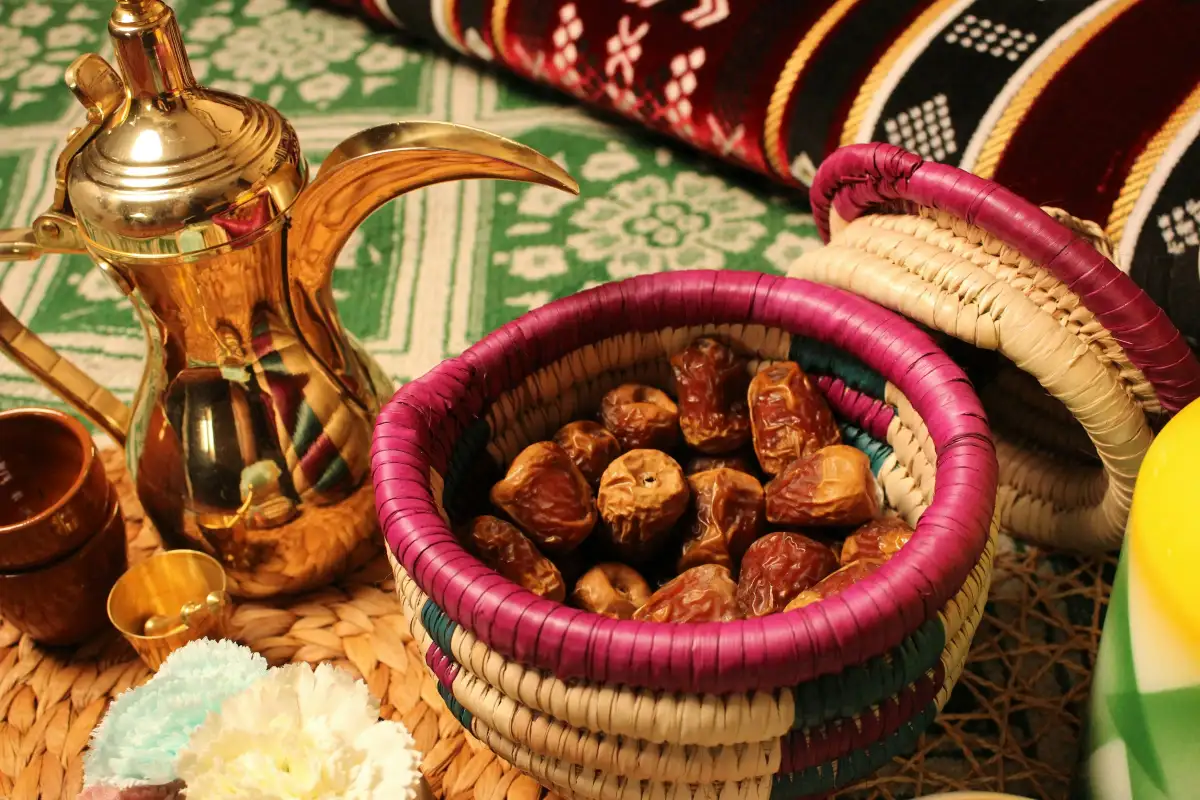
Gahwa, Arabic coffee flavoured with cardamom rather than brewed strong and bitter like espresso, is the backbone of Emirati hospitality, traditionally served from a long-spouted dallah pot into small handleless cups, always alongside dates. Refusing it outright can read as impolite in a traditional setting, though a light tilt of the empty cup signals you have had enough.
Source: Visit Abu Dhabi
Shuwaa
Shuwaa is whole lamb or goat, heavily spiced and slow-cooked for hours, traditionally in an underground pit lined with hot stones and banana or palm leaves. It is a celebration dish, most commonly served at Eid, weddings and large family gatherings, rather than something you will find as a quick lunch option.
Source: Visit Ras Al Khaimah
Emirati Dining Etiquette
Traditional Emirati meals are often eaten seated on the floor, cross-legged on cushions around a shared tray rather than individual plates, particularly in cultural experiences and some homes. A few small habits go a long way: eat and pass food with the right hand, accept at least a token amount when offered gahwa and dates, and don’t feel pressure to finish every dish, since hospitality here is built around generous portions rather than an expectation of a clean plate.
If you are invited into an Emirati home rather than a restaurant, bringing a small gift such as dates or sweets is appreciated, and removing shoes before entering the main seating area is standard practice, much as it is elsewhere in the Gulf.
Where to Eat Emirati Food
Emirati restaurants are genuinely outnumbered by international options in Dubai and Abu Dhabi, so a short, reliable list helps.
- Al Fanar Restaurant and Café: branches in Dubai, Abu Dhabi and Sharjah, styled like a 1960s Emirati village, widely considered one of the most authentic and accessible introductions to the cuisine.
- Logma: a modern, casual take on Emirati breakfast and comfort food, several Dubai locations.
- Arabian Tea House: in Al Fahidi Historical Neighbourhood, Emirati and wider Arabic dishes in a shaded courtyard setting.
- Cultural meals: the Sheikh Mohammed Centre for Cultural Understanding in Dubai runs shared Emirati meals with a local host as a genuine cultural experience, not just a meal.
Sources: Al Fanar Restaurant, Visit Ras Al Khaimah
The Modern Emirati Dining Scene
Emirati cuisine is going through a genuine fine-dining moment. In 2026, The National reported on a wave of restaurants across Sharjah, Dubai and Abu Dhabi reworking classics like machboos and balaleet into more refined, contemporary presentations, with chefs visiting Emirati homes to study how families actually cook these dishes before adapting them. It is a deliberate shift from the idea that traditional food cannot be commercially ambitious.
Source: The National
A note on camel: camel biryani, camel machboos and camel burgers show up on some tourist-facing menus as a novelty rather than an everyday Emirati staple, worth trying once out of curiosity, but not representative of typical home cooking.
Most of these dishes are easiest to find at Ramadan iftar buffets and during Eid, when hotels and traditional restaurants across the UAE put on elaborate spreads built almost entirely around harees, thareed, luqaimat and machboos. Visiting during that period, even as a non-Muslim tourist, is one of the most reliable ways to sample the full range of Emirati cooking in one sitting.
Plan the Rest of Your Trip
Use these guides alongside your food trip.
Emirati Food FAQs
What is the national dish of the UAE?
Machboos, spiced rice with chicken, lamb or fish, often flavoured with saffron and dried lime (loomi), is widely considered the closest thing the UAE has to a national dish.
Is Emirati food spicy?
No, it is aromatic rather than chilli-hot, using spices like cardamom, saffron, turmeric and dried lime for depth of flavour rather than heat.
What is harees?
A porridge-like dish of cracked wheat slow-cooked with meat and ghee until smooth, traditionally served at weddings, religious occasions and during Ramadan.
What is the difference between harees and thareed?
Harees is a wheat-and-meat porridge, while thareed is a bread-based stew made with crispy flatbread (rigag) soaked in meat and vegetable broth.
What is luqaimat?
Small, deep-fried dumplings, crisp outside and soft inside, drizzled with date syrup and sometimes sesame seeds. A classic Emirati dessert.
What is balaleet?
A traditional Emirati breakfast of sweet vermicelli noodles with cardamom and saffron, topped with a savoury fried egg.
What is gahwa?
Arabic coffee flavoured with cardamom, served from a long-spouted dallah pot in small cups, always alongside dates, as a core part of Emirati hospitality.
What is shuwaa?
Whole lamb or goat, slow-cooked for hours, traditionally in an underground pit. A celebration dish served at Eid, weddings and large gatherings.
Where can I try authentic Emirati food in Dubai?
Al Fanar Restaurant and Café and Arabian Tea House in Al Fahidi are reliable, accessible options, alongside Logma for a more modern take on Emirati breakfast.
Is machboos the same as kabsa?
They are closely related Gulf rice dishes; machboos is the Emirati and Bahraini term, while kabsa is more associated with Saudi Arabia, though spicing and style vary by household either way.
Is camel meat commonly eaten in the UAE?
Camel dishes like camel biryani or camel burgers appear mainly as novelties on tourist-facing menus rather than everyday home cooking, though camel meat and milk do have a traditional Bedouin history.
What should I drink with Emirati food?
Karak tea (spiced milk tea) with meals and snacks, and gahwa with dates as a hospitality ritual, particularly before or after a meal.
Is Emirati food easy to find in Dubai?
It is genuinely outnumbered by international cuisine, but a handful of dedicated restaurants, such as Al Fanar, make it accessible without much searching.
What is rigag?
A thin, crispy Emirati flatbread, eaten plain, with honey and cream cheese, or as the base for thareed.
Is there a modern Emirati fine-dining scene?
Yes, a growing number of restaurants in Sharjah, Dubai and Abu Dhabi are reworking classics like machboos and balaleet into more refined, contemporary dishes.
When is Emirati food most widely available?
During Ramadan, when harees, thareed and luqaimat appear on nearly every iftar menu across hotels and restaurants.
Is karak tea Emirati?
Not originally. Its roots are in South Asian tea culture, but it has become a daily staple across the UAE and is now closely associated with everyday Emirati life.
Does Emirati food differ between emirates?
Yes, subtly. Coastal emirates like Fujairah and Ras Al Khaimah lean more on seafood, while inland areas like Al Ain rely more on dates, dairy and wheat.
The Bottom Line
Emirati food rewards seeking out: machboos and harees for the everyday and celebratory classics, luqaimat and balaleet for the sweet side, and gahwa and dates to understand the hospitality behind all of it. A single meal at Al Fanar or a cultural experience through the Sheikh Mohammed Centre covers the essentials in one sitting. Browse all our Middle East travel guides for the next step.
Sources: Visit Abu Dhabi, Visit Ras Al Khaimah, Visit Ras Al Khaimah, Visit Ras Al Khaimah, Al Fanar Restaurant, The National, Nomado Travel, Property Finder Prices and menus change, so check with restaurants directly. Photo via Unsplash: L Photography.