
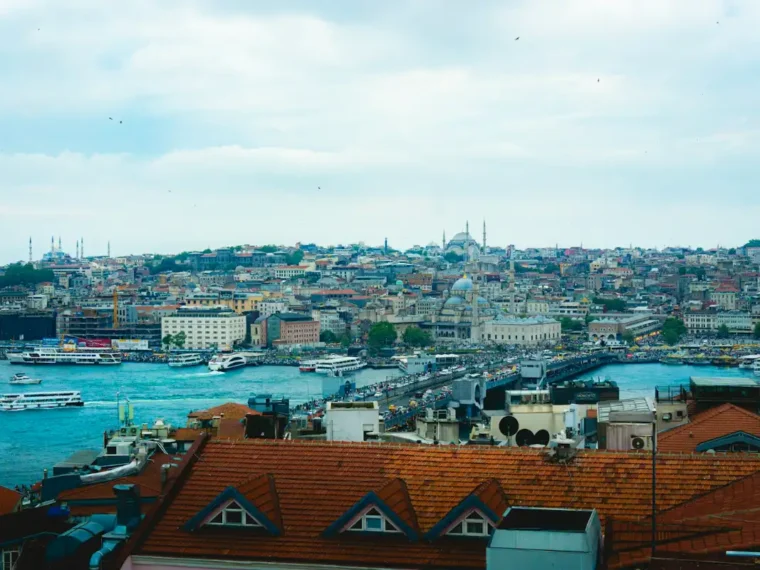
Deciding where to stay in Istanbul matters more than it does in most cities. This is a place of 16 million people split across two continents, where a badly chosen hotel means 40 minutes on a tram every time you want dinner, and a well chosen one means walking everywhere for three days.
The honest version is that there is no single best area, only trade-offs between sightseeing convenience, food and nightlife, price and quiet. This guide sets out what each neighbourhood is actually like, what it costs in late 2026, and who should pick it. For the sights themselves, see our guide to the best things to do in Istanbul.
The Quick Answer
First trip of two or three nights: stay in Sultanahmet, where you can walk to almost every major sight, and expect roughly 80 to 180 US dollars a night for a decent mid-range hotel. Second visit, or if you care about food and bars: stay in Karakoy, Galata or Cihangir, around 60 to 150 dollars, with the old city a 15 minute tram ride away. On a budget or staying a week: Kadikoy on the Asian side, roughly 30 to 80 dollars, with a 20 minute ferry to the old city. Avoid booking around Taksim Square purely because it looks central, and avoid Laleli unless price is the only thing that matters.
On this page
- How to choose, in one minute
- Sultanahmet, for first visits
- Karakoy and Galata, for food and atmosphere
- Beyoglu, Cihangir and Taksim
- Besiktas, Ortakoy and the Bosphorus
- Kadikoy and the Asian side
- Fatih, Balat and the cheaper old city
- What hotels actually cost
- Getting in from the airports
- Booking mistakes to avoid
- Where to stay FAQs
How to choose, in one minute
| If you are | Stay in | Typical mid-range rate |
|---|---|---|
| First timer, short trip, sights first | Sultanahmet | 80 to 180 dollars |
| Here for food, bars and walking | Karakoy, Galata, Cihangir | 60 to 150 dollars |
| Wanting nightlife and shops on the doorstep | Beyoglu near Istiklal | 50 to 120 dollars |
| After Bosphorus views and smart hotels | Besiktas, Ortakoy | 100 to 400 dollars |
| On a budget, or staying a week or more | Kadikoy, Moda | 30 to 80 dollars |
| Travelling with family, wanting quiet | Fatih outside Sultanahmet, Uskudar | 40 to 90 dollars |
Sultanahmet, for first visits
Sultanahmet is the historic peninsula and it is where most first time visitors should stay. Hagia Sophia, the Blue Mosque, Topkapi Palace, the Basilica Cistern and the Hippodrome are all within a 15 minute walk, the T1 tram runs straight through it, and you can be out at the sights at opening time before the day trippers arrive.
The catch is that it is almost entirely geared to tourists. Restaurants on the main streets are mediocre and overpriced, touts work the squares, and the area empties out in the evening, which some people find peaceful and others find dull. Prices sit above the city average despite the mixed quality, with mid-range boutique hotels commonly 80 to 180 dollars and Ottoman style properties 100 to 150.
Pick it if your trip is two or three nights and sightseeing is the point. Look for a rooftop terrace, since that is where Sultanahmet earns its money, and check the hotel sits on the quieter side streets rather than on the tram line.
Karakoy and Galata, for food and atmosphere
Across the Galata Bridge, this is where a lot of repeat visitors end up. Karakoy is the old port district turned coffee, design and restaurant quarter. Galata climbs the hill behind it to the tower, with narrow streets, old apartment buildings and small hotels. You are one tram stop or a 20 minute walk from Sultanahmet, and genuinely good food is on your doorstep rather than a journey away.
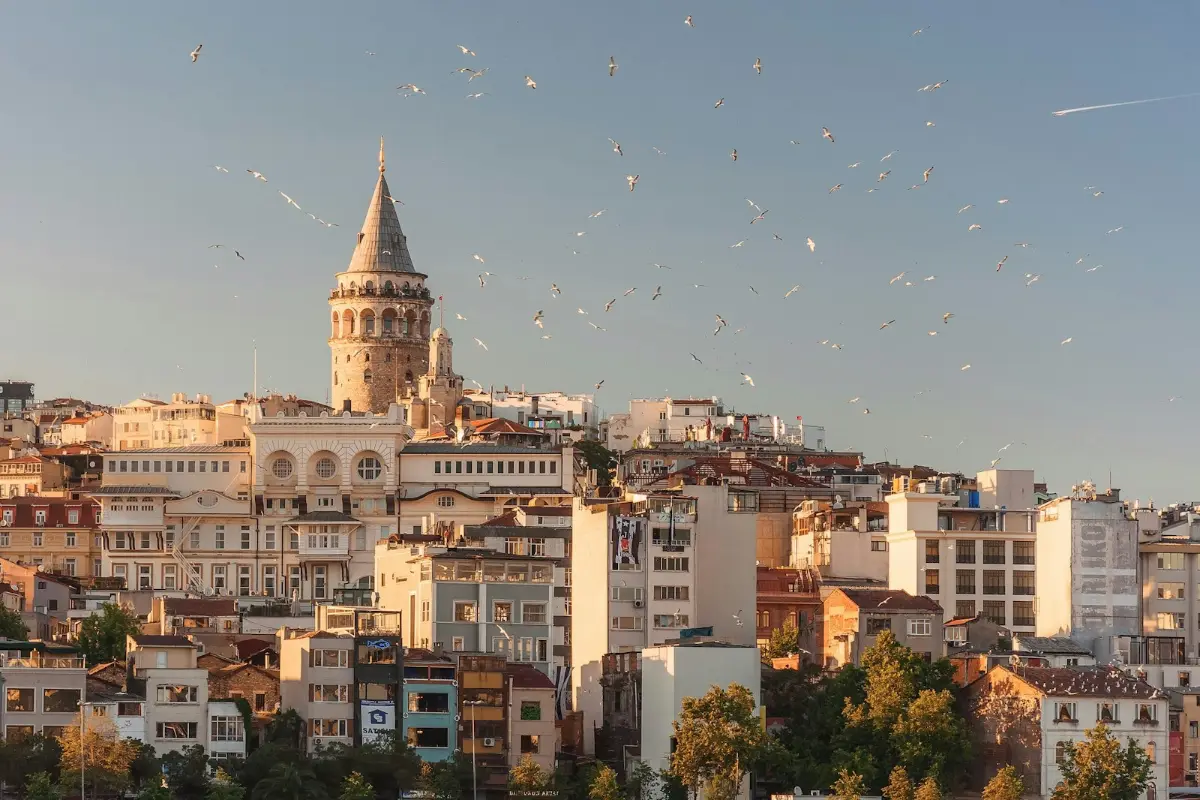
Rates run about 60 to 150 dollars for boutique mid-range, with designer properties in Karakoy going well past 200. The hills are the real downside: these streets are steep, cobbled and hard work with heavy luggage or reduced mobility. Check where your hotel sits relative to the Tunel funicular before booking.
Beyoglu, Cihangir and Taksim
Beyoglu is the broad district above Karakoy, with Istiklal Caddesi running through the middle of it. Staying near Istiklal puts you in the centre of shopping, bars and the metro, at roughly 50 to 120 dollars for a mid-range room. It is also noisy until late, crowded all day and short on charm on the main drag itself.
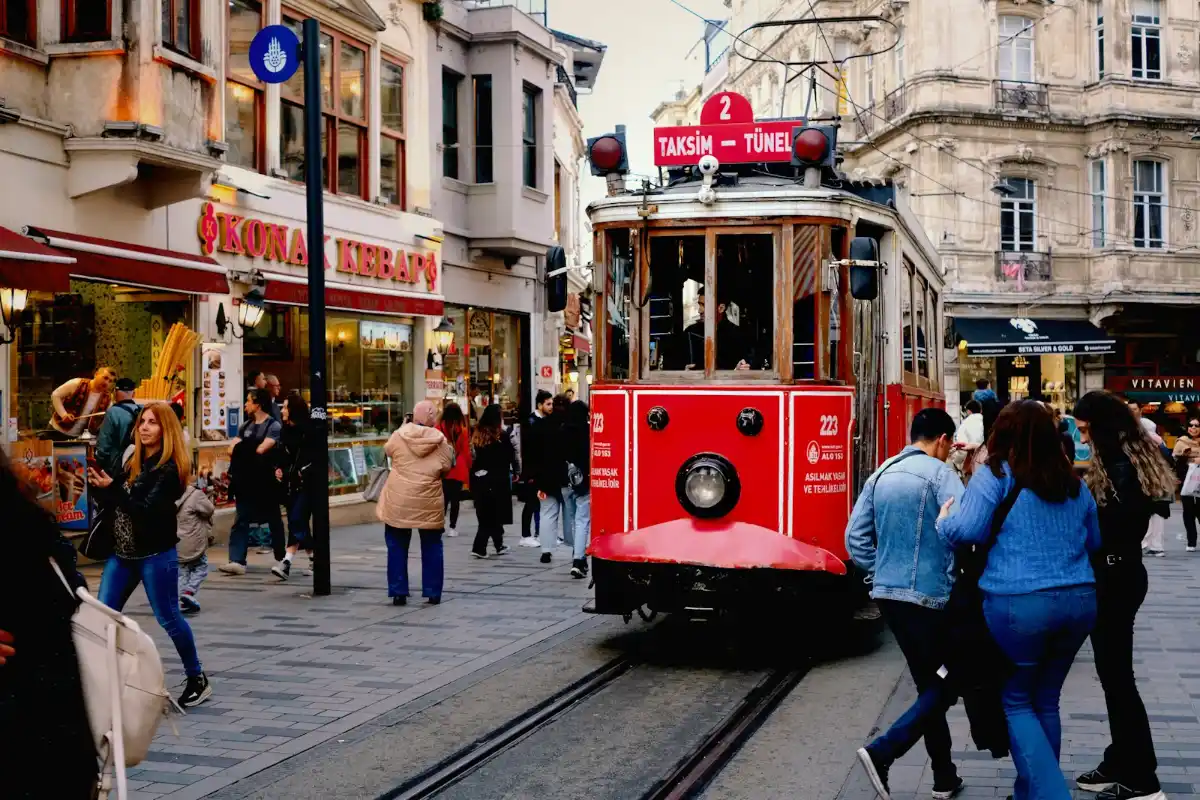
Cihangir, downhill towards the water, is the quieter and more appealing half of the same district: leafy streets, cats, cafes, and a short walk down to Karakoy. It is where to look if you want Beyoglu convenience without Istiklal noise.
Taksim Square itself is a transport hub rather than a place to stay. Plenty of large hotels cluster around it and sell themselves as central, which they are, but the immediate area is traffic, chain shops and hotel lobbies. Only stay there if you have an early transfer and want the metro on your doorstep.
Besiktas, Ortakoy and the Bosphorus
North along the European shore, this is where the high end hotel scene sits. Waterfront five star properties along the Ciragan stretch start around 350 dollars and climb steeply, and the view from the room is what you are paying for. Besiktas itself is a working neighbourhood with a market, a ferry terminal and a lot of student bars, and it is better value than its hotels suggest, with simpler places at 60 to 100 dollars.
Ortakoy, further up, is prettier and quieter, built around its waterside mosque under the bridge. You are further from Sultanahmet here, around 30 to 40 minutes by bus or ferry plus tram, so it suits a second visit or a longer stay rather than a packed three day itinerary.
Kadikoy and the Asian side
Kadikoy is the best value base in the city and the one most visitors never consider. Rooms run roughly 30 to 80 dollars for the same standard that costs 100 to 180 in Sultanahmet, the market and bar streets are excellent, and Moda along the shore is one of the nicest walks in Istanbul.
The commute is the trade-off, and it is a pleasant one. Ferries to Eminonu and Karakoy run frequently and take about 20 minutes, the Marmaray rail tunnel gets you under the Bosphorus in less, and both use the same Istanbulkart. What you lose is spontaneity: nipping back to the hotel for an afternoon rest means a crossing each way, and the last ferries do not run all night.
Pick Kadikoy if you are staying five nights or more, if you have been to Istanbul before, or if the budget is tight and you would rather spend the difference on food. Uskudar, further north on the same shore, is quieter, more conservative and cheaper again.
Fatih, Balat and the cheaper old city
Fatih is the wider district that contains Sultanahmet, and once you step out of the tourist core the prices drop sharply, to around 40 to 90 dollars. It is residential, conservative and genuinely local, with few bars and little English spoken, which suits some travellers and not others.
Balat, on the Golden Horn, is the photogenic corner of it, with painted houses, antique shops and a slow weekday rhythm. There are guesthouses and small boutique hotels here, but transport is weaker, so expect buses or a long walk to the tram.
Laleli and Aksaray, west of the Grand Bazaar, are where the cheapest beds in the old city are. They are also wholesale trading districts, busy with lorries, and a step down in feel from everywhere else listed here. Book there on price alone, knowing what you are getting.
What hotels actually cost
Istanbul spans an enormous range, from 12 dollar hostel dorms to palace suites. As a rough guide for late 2026, budget beds and basic guesthouses run under 50 dollars, mid-range boutique hotels sit between 50 and 150, and luxury starts around 200 and goes past 600 for the famous addresses. The city-wide average for a hotel night sits in the 60 to 70 dollar range, with the European side slightly above it.
| Area | Budget | Mid-range | Walk or ride to Hagia Sophia |
|---|---|---|---|
| Sultanahmet | Hostels from about 15 dollars | 80 to 180 dollars | 5 to 15 minutes on foot |
| Karakoy and Galata | From about 40 dollars | 60 to 150 dollars | 15 to 20 minutes by tram |
| Beyoglu near Istiklal | From about 35 dollars | 50 to 120 dollars | 20 to 25 minutes |
| Besiktas and Ortakoy | From about 60 dollars | 100 to 400 dollars | 30 to 40 minutes |
| Kadikoy and Moda | From about 25 dollars | 30 to 80 dollars | 20 minute ferry plus tram |
| Fatih outside Sultanahmet | From about 25 dollars | 40 to 90 dollars | 15 to 25 minutes |
💡 THE ACCOMMODATION TAX, AND A RARE PIECE OF GOOD NEWS
Turkey charges an accommodation tax, the konaklama vergisi, on overnight stays and the services sold with them. It has been in force since January 2023 at 2 per cent, but a presidential decision published on 1 May 2026 cut it temporarily to 1 per cent until 31 December 2026, after which it is due to return to 2 per cent. Some prepaid rates include it and some do not, which is why a hotel occasionally asks for a small extra sum at check-out. Ask one question at check-in, whether the accommodation tax is already covered by what you have paid, and the issue disappears.
Prices rise in April, May, September and October, which are the most comfortable months, and drop in midwinter outside the New Year period. If you are watching the overall budget, our colleagues guide to hidden travel costs and the notes on paying abroad without losing money are both worth reading before you book.
Getting in from the airports
Istanbul Airport (IST) is on the European side and serves most international flights. The M11 metro is the cheap way in, priced by distance from about 37.40 TL, with a change at Gayrettepe for the city centre, and Havaist buses are easier with luggage. Reckon on an hour to Sultanahmet in normal traffic and considerably more at rush hour.
Sabiha Gokcen (SAW) is on the Asian side and is used by many low cost flights. From there, Kadikoy is close and the European side is a long haul, which is another argument for staying on the Asian side if you fly into SAW. Check which airport your flight uses before you pick a neighbourhood, not after.
Booking mistakes to avoid
- Booking by map distance. Istanbul is built on hills and the straight line on the map is often a staircase. Check the walking route, not the crow flight.
- Assuming Taksim means central. It is central for transport and poor for atmosphere. Cihangir or Galata give you the same access and a far better street.
- Ignoring the tram line. In the old city, a room facing T1 means tram noise from early morning. Ask for a rear or courtyard room.
- Paying for a view you cannot see. Sea view in Istanbul listings sometimes means a sliver between two buildings. Check recent guest photographs rather than the hotel gallery.
- Forgetting the call to prayer. In Sultanahmet and Fatih you are close to several mosques and the first call is before dawn. Most people stop noticing by night two, but light sleepers should pack earplugs.
- Splitting a short trip between two sides. Moving hotels mid-trip costs you half a day. On three nights, pick one base and stay in it.
Explore More
Pair this with the rest of our Turkey series as you plan.
Where to stay FAQs
What is the best area to stay in Istanbul for first-time visitors?
Sultanahmet. Hagia Sophia, the Blue Mosque, Topkapi Palace and the Basilica Cistern are all walkable from it, and the T1 tram connects you to everywhere else. The trade-off is weak restaurants and a quiet evening scene.
How much does a hotel in Istanbul cost per night?
Budget rooms and hostels sit under 50 dollars, mid-range hotels run 50 to 150, and luxury starts around 200 and climbs past 600. The city-wide average sits around 60 to 70 dollars a night depending on area.
Is it better to stay on the European or Asian side?
European side for a first trip, because every major historic sight is there. Asian side, meaning Kadikoy or Moda, if you want better value, better everyday food and a more local feel, and you do not mind a 20 minute ferry.
Is Sultanahmet too touristy?
It is very tourist focused, with pushy restaurants and touts on the squares. It is also the most convenient base in the city for sightseeing. For two or three nights the convenience usually wins, for a week it does not.
Where should I stay in Istanbul for food and nightlife?
Karakoy, Galata and Cihangir on the European side, or Kadikoy on the Asian side. All four have far better eating than Sultanahmet and bars that locals actually use.
Is Kadikoy a good base for sightseeing?
Workable rather than ideal. Ferries to Eminonu and Karakoy take about 20 minutes and the Marmaray is quicker, but each return to the hotel means a crossing. Best for stays of five nights or more.
Should I stay near Taksim Square?
Only for transport convenience, such as an early flight. The square itself is a traffic and metro hub with little character. Cihangir and Galata are ten minutes away and far nicer places to sleep.
Is there a tourist tax on hotels in Istanbul?
Yes, the national accommodation tax. It is normally 2 per cent of the room rate, but was cut temporarily to 1 per cent from 1 May 2026 until 31 December 2026. Some rates include it, some add it at check-out.
How many nights should I stay in Istanbul?
Three full days is the realistic minimum for the main sights. Four or five lets you add Balat, Dolmabahce, the Asian side or the Princes Islands without rushing.
Is Istanbul safe at night in these areas?
Generally yes, with normal city caution. Sultanahmet is quiet after dark, Beyoglu and Kadikoy are busy and lively. Watch for pickpockets on the tram and around Istiklal, and use a ride hailing app rather than flagging taxis late.
Are cheap hotels in Laleli worth it?
Only if price is your single priority. Laleli and Aksaray are wholesale trading districts with the cheapest beds in the old city, busy with lorries and noticeably rougher than the areas around them.
Which area is best for families?
Fatih outside the Sultanahmet core, or Kadikoy. Both give you apartments and larger rooms at sensible prices, quieter streets and easy transport, without the hills of Galata or the noise of Istiklal.
Do I need a hotel with a rooftop terrace?
In Sultanahmet it is the single best upgrade, since breakfast with the Blue Mosque in front of you is what you came for. Elsewhere it matters less than being on a street you want to walk down.
How far is Sultanahmet from Istanbul Airport?
About an hour by road in normal traffic, longer at rush hour. The M11 metro plus a change is the cheapest route, from around 37.40 TL, and Havaist buses are the simplest with luggage.
Should I split my stay between two neighbourhoods?
Not on a three night trip, since changing hotels costs half a day. On a week, two nights in Sultanahmet and the rest in Karakoy or Kadikoy works well.
When are hotel prices highest in Istanbul?
April, May, September and October, which are also the best months weather wise. Midwinter outside New Year is the cheapest, and July and August sit in between with heat and crowds.
Is an apartment better than a hotel in Istanbul?
For stays of five nights or more, often yes. Aparthotels with kitchens run roughly 60 to 100 dollars, and self catering takes the sting out of breakfast prices in tourist areas.
What about staying near the Grand Bazaar?
It is walkable from Sultanahmet anyway, so there is little reason to base yourself there. The streets immediately around it are commercial, crowded in the day and dead at night, and the bazaar closes on Sundays.
The bottom line
Match the neighbourhood to the length of your trip, not to the photographs. Two or three nights, stay in Sultanahmet and walk to everything. Four or more, or a second visit, stay in Karakoy, Galata or Cihangir and eat properly. A week or a tight budget, cross to Kadikoy and treat the ferry as part of the holiday. Any of the three works. Splitting a short trip between them does not.
Sources: Nomado, Explore More Turkey, Guide Istanbul, Orbitax, KPMG, Metroflow Hotel rates and taxes change often, so check before you book. Photos via Unsplash: Taha Hatipoglu, Anna Berdnik, Wina Tristiana.