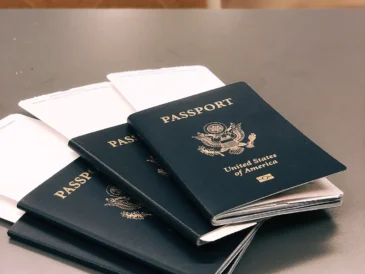
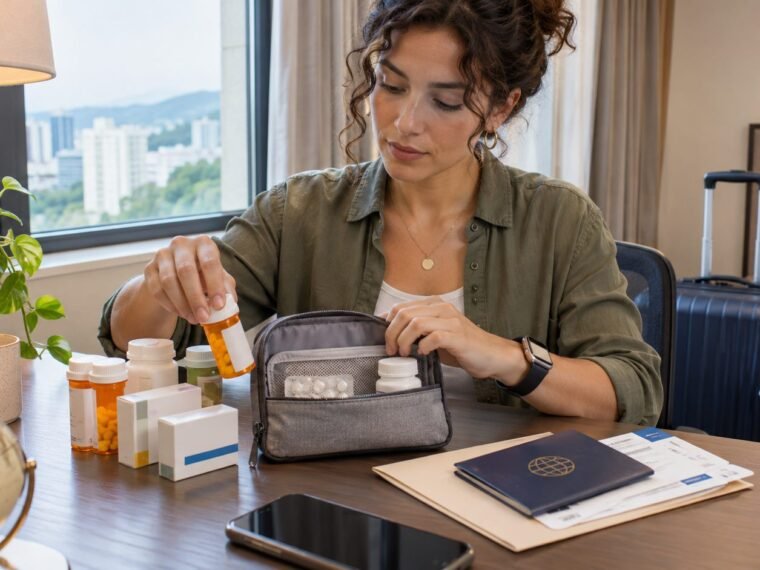
Before traveling internationally with prescription medication, check the rules for every country on your route—not just your final destination. Keep medicine in its original labeled packaging when possible, carry it in your hand luggage, and bring a copy of the prescription or a clinician’s letter; some medicines that are routine at home are restricted or require advance paperwork abroad.
The Quick Answer
Check destination-specific medication rules with official government sources well before departure, confirm whether permits or quantity limits apply, and ask your prescriber or pharmacist about timing across time zones. Pack enough for the trip plus a reasonable delay buffer, keep it accessible in your carry-on, and never assume a prescription makes a medicine legal in another country.
On this page
- Check each country’s rules
- Pack medication safely
- Plan doses across time zones
- Airport screening and documentation
- FAQs

Check prescription medication rules before traveling internationally
Rules vary by medicine, destination, quantity, and transit country. The U.S. Department of State advises travelers to verify prescription medication rules before leaving; its medicine and health guidance and international travel checklist are useful starting points for U.S. travelers.
Then check the destination government’s customs, health, or embassy website for the exact medication name and active ingredient. Ask about controlled drugs, quantity limits, advance permits, translation requirements, and any documents needed in a connecting country. If official information is unclear, contact the relevant embassy or consulate before travel.
Pack medication so it stays with you
- Keep essential medicines in your carry-on rather than checked baggage.
- Use original labeled packaging and carry a copy of the prescription.
- Bring the generic name and active ingredient; brand names can differ by country.
- Carry only the quantity allowed by your route’s rules, plus any permitted reserve for delays.
- Store medication according to its label, including temperature instructions.
Do not transfer pills into an unlabeled organizer for the international leg unless you have checked the rules and can still identify them clearly. If you need refrigerated or injectable medication, ask your airline and prescriber about a practical plan before departure.
Good to Know
A doctor’s letter can help explain a legitimate medical need, but it does not replace a permit or make a restricted medicine legal. Follow the destination’s official requirements.
Plan doses across time zones with your clinician
Changing time zones can complicate medicines that need strict timing. Ask the prescriber or pharmacist how to handle the flight day, local dosing schedule, missed doses, and the return journey; do not double a dose unless your healthcare professional tells you to.
Carry your clinician’s contact information and a current medication list. If a medicine is lost or damaged, use official local health services and do not buy a replacement from an unverified seller.

Prepare for airport screening
Check your departure and transit airport’s current rules for liquids, needles, medical devices, and cooling packs. The U.S. Transportation Security Administration explains special procedures for medical needs; travelers departing elsewhere should use that airport authority’s guidance.
Keep medication and documents together in a pouch that is easy to reach. Our travel packing list can help organize essentials, and our guide to hidden trip costs has a reminder to account for insurance and required documentation costs where they apply.
FAQs
Can I take prescription medication to another country?
It depends on the medicine and each country on your route. Check official destination and transit-country rules before you travel; some medicines require permits or are prohibited.
Should prescription medicine go in checked luggage or carry-on?
Keep essential medication in your carry-on so it remains accessible if checked baggage is delayed or lost. Follow storage instructions and airport screening rules.
Do I need a doctor’s letter to travel with medication?
Requirements vary by country and medicine. A letter or prescription copy may help document medical need, but check whether the destination also requires a permit or specific form.
How should I take medication when crossing time zones?
Ask your prescriber or pharmacist for a schedule tailored to your medicine and route. Timing needs vary, so do not adjust doses based only on general travel advice.
Verify first, pack accessibly
Look up the rules for the full route, talk with your clinician about timing, and keep essential medication in your hand luggage. A few official checks before you leave are far less stressful than negotiating a medicine question at a border counter.
Last updated: November 10, 2026. Entry and medication rules can change; confirm current official requirements for your route before departure.